✓
Production-area surfaces
Reachable work surfaces, railings, controls, and surrounding ledges can be added to the scope according to your facility procedures and access requirements.
Serving Boston, Massachusetts & surrounding areas
Mon–Fri 8am–6pm · Sat 9am–2pm
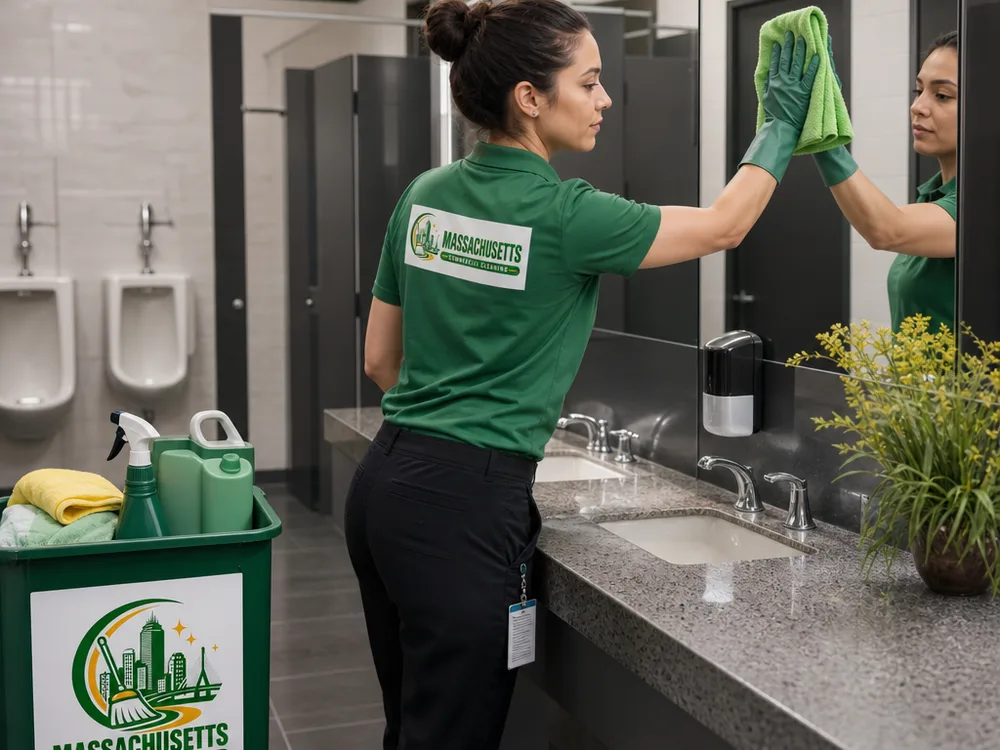
Industrial spaces ask more of a cleaning plan than a standard office routine. Massachusetts Commercial Cleaning builds the work around your surfaces, traffic, access rules, and operating schedule.
Active industrial facilities collect a different mix of dust, debris, tracked-in material, and floor residue than office spaces. Massachusetts Commercial Cleaning starts by identifying the areas that need routine attention, the work that needs a periodic reset, and the conditions that change the order of the job.
A practical scope accounts for people moving through the space, equipment that stays in place, storage zones, and the hours when cleaning can happen without disrupting operations. That gives your team a clear plan instead of a generic list that overlooks the parts of the facility carrying the heaviest load.
From our Boston base, we provide commercial industrial cleaning with written priorities for visible areas, utility spaces, restrooms, break areas, and floors. The walkthrough is where we confirm boundaries, surface requirements, and any site procedures your facility needs followed.
Reachable work surfaces, railings, controls, and surrounding ledges can be added to the scope according to your facility procedures and access requirements.
Floor work addresses dry debris, tracked-in residue, edges, and traffic lanes. The right method depends on the floor condition, coating, and how the area is used.
Restroom cleaning covers fixtures, partitions, sinks, mirrors, touchpoints, and floor edges, with a frequency set by actual use rather than a generic schedule.
Tables, counters, sink areas, appliance exteriors, trash, and floor conditions receive attention so shared spaces are ready for the next shift.
Entries and receiving areas often show debris first. A defined routine helps keep these transition points from carrying dirt farther into the facility.
Ledges, frames, accessible vents, baseboards, and corners can collect material that routine passes miss. Periodic detail work keeps that buildup from becoming the baseline.
Most offices want a core routine that keeps the space presentable daily, plus deeper tasks scheduled weekly or monthly. Your scope can be built around your suite size, the number of restrooms, and how heavily kitchens and conference rooms are used.
Common items in a Boston office cleaning scope include:
For multi-tenant buildings around 263 Summer St and similar commercial corridors, we also plan for practical constraints like where waste can be staged, what entrances are allowed after hours, and how deliveries and access are handled by property management.
We turn your workspace priorities, operating hours, and building requirements into a documented cleaning routine.
At the site review, our team records floor types, traffic routes, occupied work zones, shared rooms, access limits, and the buildup your team wants addressed.
Your facility identifies any restricted areas, handling instructions, timing limits, and site procedures. Those details shape the written plan before work begins.
Cleaning is timed around operations and access windows so the scope can be completed without creating avoidable conflicts in active areas.
After the work, the agreed priorities provide a practical reference for reviewing results and deciding whether recurring or periodic service fits next.
Recurring commercial cleaning in Boston is commonly discussed at about $0.12 to $0.35 per square foot, with small offices around $300 to $900 per month and larger facilities around $1,500 to $6,000+ per month. Those figures provide context for recurring service, not a price for industrial project work.
Industrial cleaning is quoted per project after a walkthrough because floor condition, site access, operating hours, the areas included, and the level of buildup determine the work. A written scope confirms exactly what is being cleaned before pricing is finalized.
An industrial cleaning scope can include floors, restrooms, break areas, reachable work surfaces, entry zones, trash, and accessible detail areas. The exact list depends on your facility layout, the condition of each area, and any procedures your team needs the crew to follow. A walkthrough turns those needs into a written plan.
Scheduling is built around the access windows and operating requirements you provide. During the walkthrough, we confirm entry procedures, any areas that remain active, and the sequence that makes sense for the facility. That planning helps the work stay out of the way of normal operations.
Restricted areas are identified before service begins. Your team can define no-entry spaces, equipment boundaries, escort requirements, and the conditions for access. Those instructions become part of the scope so the crew is working from the same expectations your facility uses.
They often do because floor condition, coating, traffic, and residue differ from one facility to another. The walkthrough helps determine whether routine debris removal, a more detailed project, or a combination of both is appropriate for the areas you want cleaned.
Project cost depends on the space involved, soil level, floor and surface types, access conditions, timing, and the tasks included. Because industrial work is project-based, the final amount is confirmed after a walkthrough and a written scope rather than assigned from a monthly office-cleaning rate.
Yes, an initial project can establish a cleaner baseline before a recurring plan begins. The recurring scope can then focus on the areas that need regular maintenance, while periodic detail work is scheduled when conditions and facility use call for it.
Start by outlining how your facility is used, which areas need attention, and when access is available. We will review the space, document the project priorities, and confirm pricing after the walkthrough.
Request a quote
Send the details and we will follow up to arrange a walkthrough and a written scope.