✓
Locker rooms
Lockers, benches, vanities, waste, floor drains, and damp floor edges receive focused care because member traffic and moisture concentrate there.
Serving Boston, Massachusetts & surrounding areas
Mon–Fri 8am–6pm · Sat 9am–2pm
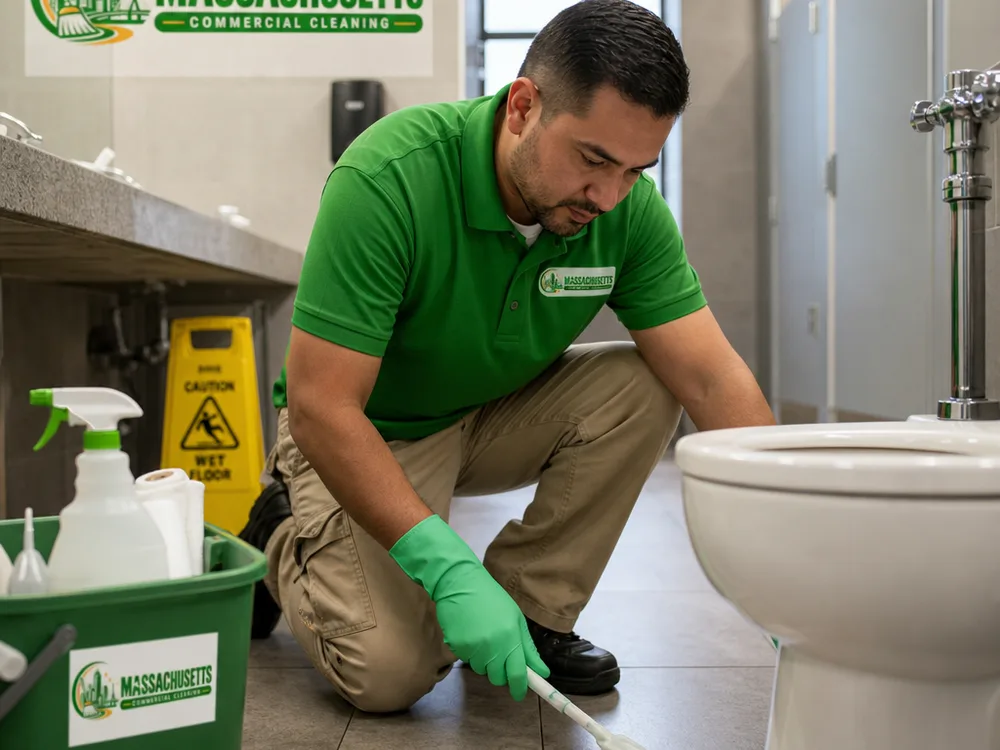
Locker rooms, showers, shared equipment, mats, and rubber flooring carry the heaviest workload in a gym. Massachusetts Commercial Cleaning arranges the routine around member traffic, humidity, accessible equipment, and the hours your facility stays active.
A gym does not have one quiet reset point. Members arrive early, train late, move between equipment and locker rooms, and leave sweat and humidity on the surfaces that see shared use. Locker rooms and showers often set the pace of the entire cleaning plan.
Rubber flooring, vinyl upholstery, mats, mirrors, and equipment frames each require attention based on their condition and your facility’s product instructions. Free-weight areas and studios also have different access needs, since classes and training continue across the day.
Boston fitness centers can define recurring service around member-facing spaces and the busiest wet areas. The routine separates locker rooms, showers, equipment zones, studios, reception, restrooms, and staff areas so each receives a schedule tied to its actual use.
Lockers, benches, vanities, waste, floor drains, and damp floor edges receive focused care because member traffic and moisture concentrate there.
Shower walls, fixtures, partitions, floors, and wet-area transitions can be scheduled around the humidity and repeated use these rooms carry.
Accessible equipment frames, handles, consoles, upholstery, and nearby floor space can be included according to the product directions your facility provides.
Rubber and vinyl surfaces are reviewed for sweat, scuffs, tracked-in debris, and the care instructions that protect their finish.
Weight racks, accessible surrounding floors, mirrors, and pathways can be addressed around equipment placement and the active training schedule.
Studios, mats, rails, mirrors, and floor space can have their own coverage aligned with class times and room availability.
Most offices want a core routine that keeps the space presentable daily, plus deeper tasks scheduled weekly or monthly. Your scope can be built around your suite size, the number of restrooms, and how heavily kitchens and conference rooms are used.
Common items in a Boston office cleaning scope include:
For multi-tenant buildings around 263 Summer St and similar commercial corridors, we also plan for practical constraints like where waste can be staged, what entrances are allowed after hours, and how deliveries and access are handled by property management.
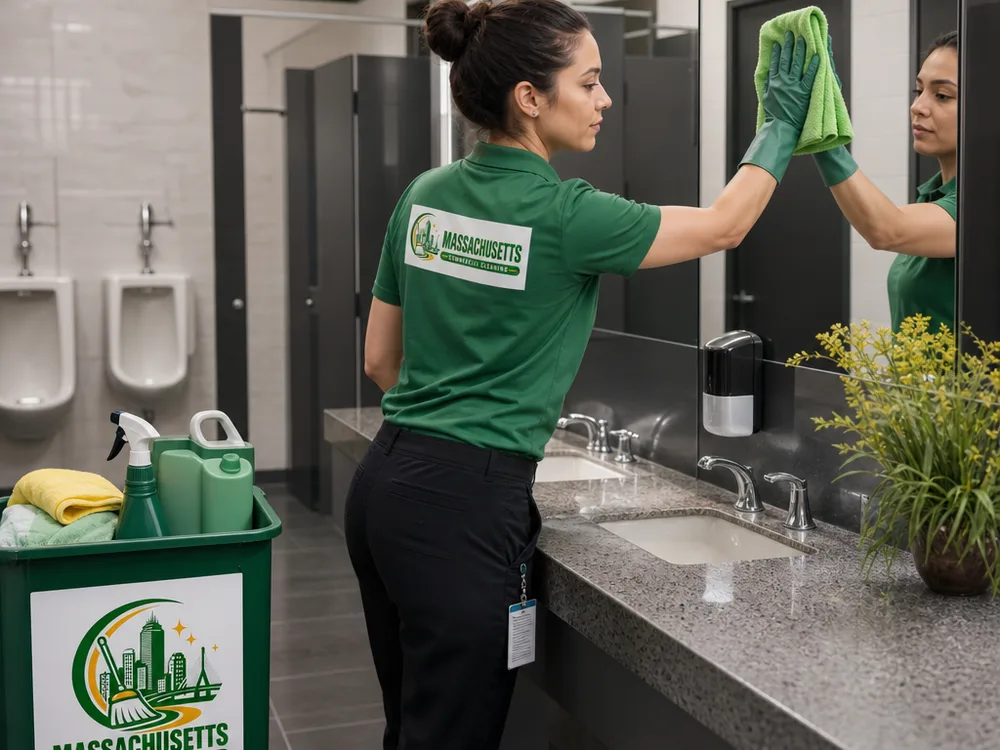
We turn your workspace priorities, operating hours, and building requirements into a documented cleaning routine.
Locker rooms, showers, vanities, benches, drains, and wet floor transitions are reviewed first because they establish the heaviest recurring workload.
The facility identifies equipment areas, rubber flooring, free weights, studios, mats, and the member routes that must remain open during service.
Early openings, late member use, and class schedules are used to find workable access periods instead of assuming the gym has a single closing gap.
The recurring routine keeps sweat-prone equipment surfaces, moisture-heavy rooms, and material-specific floors in proportion to the use each area receives.
Fitness center and gym cleaning in Boston is commonly discussed at about $0.12 to $0.35 per square foot for recurring commercial service. Locker-room and shower volume can move the recurring plan more than floor area alone: a smaller fitness center may be around $300 to $900 per month, while a larger facility may be around $1,500 to $6,000+ per month, depending on frequency and scope.
Locker rooms, showers, humidity, equipment quantity, rubber and vinyl flooring, studio schedules, member hours, and the approved access period all affect the recurring price. The final amount follows a review of those gym-specific conditions.
They are typically planned as distinct wet areas because moisture, fixtures, benches, drains, and member volume create the highest recurring workload. Gym operations specify access, materials, timing, and the spaces included, so the routine reflects the conditions on site instead of relying on a generic checklist.
Accessible frames, handles, consoles, upholstery, and surrounding floor space can be listed according to facility product instructions. Gym operations specify access, materials, timing, and the spaces included, so the routine reflects the conditions on site instead of relying on a generic checklist.
Rubber and vinyl surfaces are evaluated for sweat, scuffs, debris, and the material-specific care directions your facility provides. Gym operations specify access, materials, timing, and the spaces included, so the routine reflects the conditions on site instead of relying on a generic checklist.
Early openings, late use, and class schedules are used to identify access periods rather than assuming an empty closing window. Gym operations specify access, materials, timing, and the spaces included, so the routine reflects the conditions on site instead of relying on a generic checklist.
Yes, studio coverage can follow class timing and include approved mats, mirrors, rails, and flooring. Gym operations specify access, materials, timing, and the spaces included, so the routine reflects the conditions on site instead of relying on a generic checklist.
Wet-area volume, equipment zones, floor materials, studios, traffic, frequency, and access conditions shape the recurring scope. Gym operations specify access, materials, timing, and the spaces included, so the routine reflects the conditions on site instead of relying on a generic checklist.
Identify the locker rooms, showers, equipment zones, floor materials, studios, and active member periods that carry the most use. The recurring plan will be organized around those areas, then priced after the facility review.
Request a quote
Send the details and we will follow up to arrange a walkthrough and a written scope.