✓
Public lobbies
Entry doors, glass, seating, floors, visible ledges, trash, and customer pathways can be prioritized to keep the first area visitors encounter orderly and presentable.
Serving Boston, Massachusetts & surrounding areas
Mon–Fri 8am–6pm · Sat 9am–2pm
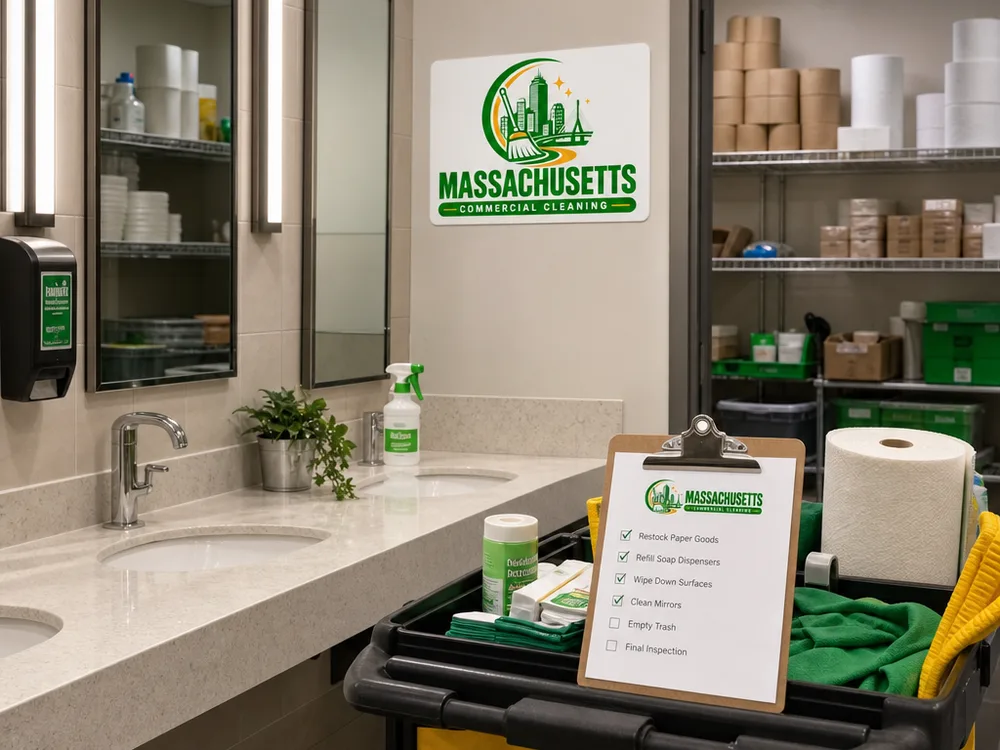
A financial institution needs a polished public lobby without losing control of staff-only and restricted areas. The plan follows customer traffic, teller-side boundaries, entry glass, restrooms, and the access procedures your team sets.
Customers notice the entrance, lobby floor, reception or teller line, glass, seating, and restroom before they see most of the building. These public-facing details need consistent attention, yet the same location may also contain offices, workrooms, and controlled spaces that require defined access.
Public and staff areas are separated at the outset of planning, using the access rules your institution already follows. Your team identifies entry procedures, restricted rooms, areas requiring direction, and the surfaces that belong in the cleaning routine. That makes the scope practical without assuming access where it has not been granted.
Boston financial institutions can use a written plan to coordinate lobby care, customer waiting areas, restrooms, offices, staff rooms, and approved work areas. Branch access procedures and public-lobby observations clarify traffic patterns, visible priorities, security boundaries, and the service period before recurring work is scheduled.
Entry doors, glass, seating, floors, visible ledges, trash, and customer pathways can be prioritized to keep the first area visitors encounter orderly and presentable.
Your institution defines the accessible counters, dividers, floors, and boundaries around teller operations so the crew works only within approved areas and directions.
Chairs, tables, touchpoints, glass, waste, and nearby floors can be included for the areas customers use while waiting for service or appointments.
Public restroom care can prioritize fixture lines, dispensers, waste, floor edges, and the visible finish customers encounter during a visit.
Approved offices, break rooms, staff restrooms, and shared workspaces can have a separate routine for reachable surfaces, trash, floors, and common-use areas.
Weather, street debris, and regular foot traffic make doors, mats, thresholds, and lobby floor paths especially visible. The plan can keep those transitions in regular focus.
Most offices want a core routine that keeps the space presentable daily, plus deeper tasks scheduled weekly or monthly. Your scope can be built around your suite size, the number of restrooms, and how heavily kitchens and conference rooms are used.
Common items in a Boston office cleaning scope include:
For multi-tenant buildings around 263 Summer St and similar commercial corridors, we also plan for practical constraints like where waste can be staged, what entrances are allowed after hours, and how deliveries and access are handled by property management.
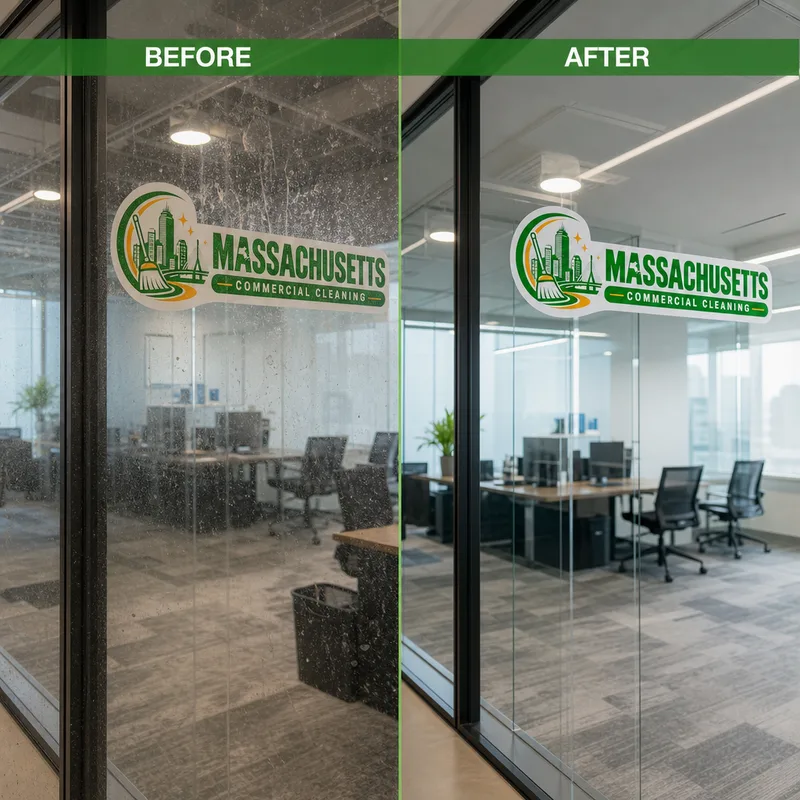
We turn your workspace priorities, operating hours, and building requirements into a documented cleaning routine.
The site review covers the entry, lobby, waiting spaces, public restrooms, and visible floor paths to identify where presentation and traffic have the greatest impact.
Institution staff identify restricted rooms, teller-side limits, escort procedures, and approved work areas so every part of the written scope has a clear permission level.
Cleaning is scheduled around operating hours, customer activity, closing tasks, and the building procedures that control access to the spaces included in the plan.
The recurring list keeps public and staff priorities visible while giving your team a way to revisit the plan if traffic patterns, rooms, or access rules change.
A recurring cleaning plan for a Boston financial institution is generally discussed at about $0.12 to $0.35 per square foot. A compact branch may be around $300 to $900 per month, while larger facilities may be around $1,500 to $6,000+ per month, depending on frequency and scope.
Public lobby coverage, controlled-access procedures, teller-side boundaries, restroom use, office areas, floor conditions, and the approved service window all affect the recurring price. Reviewing the access and work conditions provides the information needed to confirm the written plan and final pricing.
Your institution identifies the areas that may be entered, the surfaces included, and the time when work can occur. Teller-side boundaries, no-touch items, and any escort or access directions are recorded in the scope so service follows your established procedures.
Lobby coverage can include entry glass, doors, seating, visible surfaces, trash, customer pathways, and floors. The walkthrough helps define the tasks according to the traffic and layout of your location, with separate attention available for periodic detail work.
Restricted rooms and no-entry zones are named before work starts. Your team can specify escort requirements, approved access periods, or areas that are never included. Those directions give the cleaning crew a clear boundary and prevent assumptions about secured spaces.
The access period your institution provides determines the service schedule. Closing procedures, alarm directions, staffed-lobby requirements, and any remaining activity are reviewed at the walkthrough so the cleaning window fits the operation.
They can be included. A restroom routine can address fixtures, sinks, mirrors, partitions, dispensers, waste, and floors according to customer traffic and the practices your building uses for replenishment. The final list is confirmed in the written scope.
Cost is influenced by square footage, visit frequency, public versus approved staff areas, lobby traffic, restroom volume, access procedures, floor types, and the work window. A walkthrough lets Massachusetts Commercial Cleaning confirm those conditions before finalizing recurring pricing.
Outline the public spaces, controlled-access areas, lobby priorities, and service period your institution requires. Branch operating procedures will document the facility and confirm the recurring scope with pricing.
Request a quote
Send the details and we will follow up to arrange a walkthrough and a written scope.